February 27, 2026
India vs Turkey Steel Pricing Comparison 2026
India vs Turkey Steel Export Prices 2026 : Which Country Offers Better Rates? The global steel trade in 2026 presents...

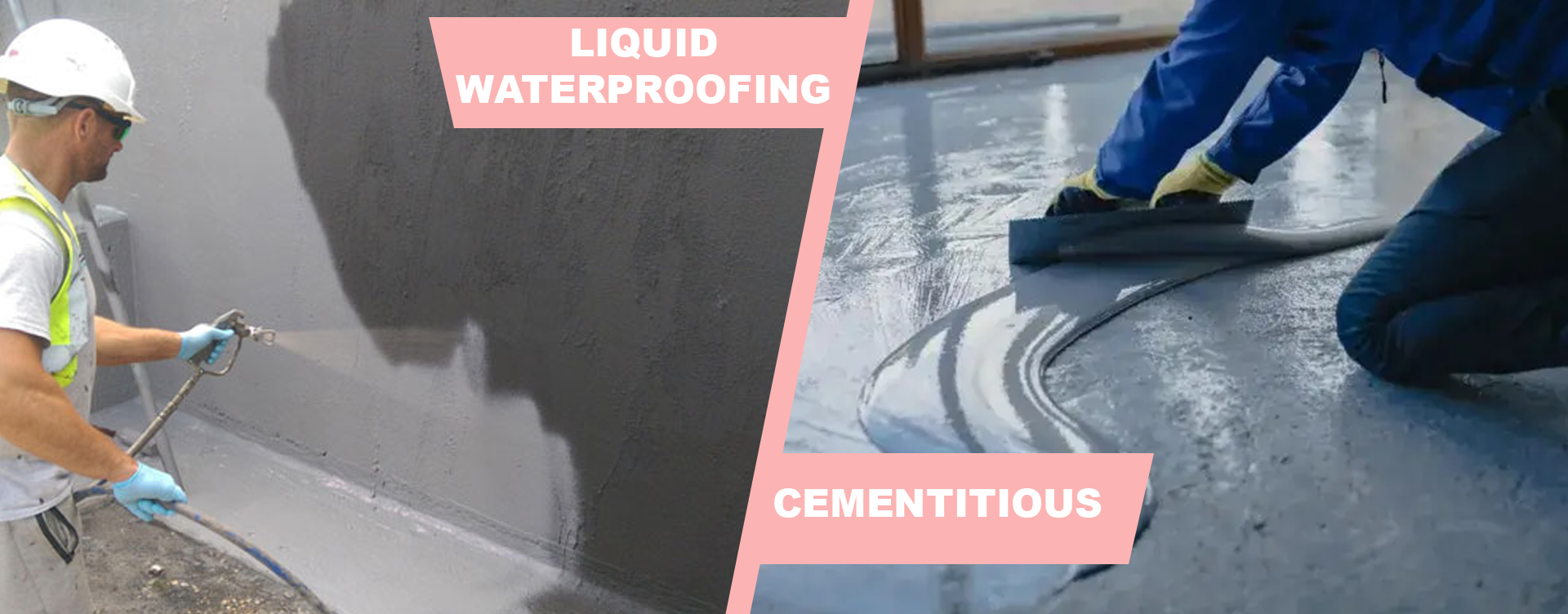
Cementitious vs Liquid Waterproofing – Which Performs Better in Middle East?
Waterproofing failure in the Middle East is rarely a material problem alone – it is usually a climate mismatch problem.
Across the UAE, Saudi Arabia, Qatar, Oman, and parts of Africa, construction materials are exposed to conditions that few other regions can match: surface temperatures exceeding 60 – 70°C, extreme UV radiation, rapid thermal expansion and contraction between day and night, coastal salinity that accelerates degradation, and occasional heavy rainfall with ponding that tests every seam and joint.
In these conditions, the choice between cementitious waterproofing and liquid-applied waterproofing membranes directly affects warranty exposure, maintenance cycles, and distributor reputation. For importers and building material distributors supplying Gulf and African markets, the question is not which system is more popular globally – but which system actually performs under desert climate stress.
Market Context : Why Waterproofing Selection Is Shifting ?
Global waterproofing materials are projected to grow at 6 – 8% CAGR, driven by rooftop solar installations, high-rise residential projects, infrastructure expansion, and podium decks in mixed-use developments. However, within the Middle East specifically, a clear bifurcation is emerging.
Liquid elastomeric membranes are steadily gaining share in exposed applications, while cementitious systems continue to dominate subgrade and internal use. This is not a trend driven by marketing or branding – it is purely performance-driven. Contractors and specifiers are learning through experience which systems hold up and which systems generate callbacks.
Industry estimates indicate that over 65% of new terrace and podium deck installations in the UAE now specify liquid membranes instead of cementitious systems. In Saudi Arabia’s giga-projects, where performance specifications are particularly stringent, that figure approaches 80% for exposed applications.
Cementitious Waterproofing : Where It Performs Well
Cementitious waterproofing is essentially a polymer-modified cement slurry that chemically bonds with concrete. It has been used for decades because it works – in the right applications.
It is widely specified for :
Read More About GCC’s Building Materials Product Range
Performance Profile in Middle East Conditions
| Parameter | Cementitious Waterproofing |
|---|---|
| Bond with concrete | Excellent – chemical adhesion |
| UV resistance | Weak – requires protective covering |
| Crack bridging ability | Low – typically <1mm |
| Thermal movement tolerance | Limited – rigid structure |
| Application skill required | Low to moderate |
| Cost per m² | Lower |
| Best suited for | Underground & permanently covered areas |
Cementitious systems perform reliably when protected from UV exposure and structural movement. However, on exposed rooftops and terraces, the daily temperature fluctuation from 5°C at night to 50°C+ during the day causes micro-cracking over time unless the system is heavily reinforced or protected by additional toppings.
For distributors supplying large housing projects and mid-market construction, cementitious waterproofing remains a high-volume, price-sensitive SKU. It moves in quantity, and buyers understand it. The risk lies not in the product itself, but in misapplying it to exposed locations where it was never designed to perform.
Liquid Waterproofing Membranes: Climate-Driven Adoption
Liquid waterproofing systems – typically polyurethane, acrylic, or hybrid polymer formulations – are applied in fluid form and cure to form seamless, elastic membranes. Unlike cementitious systems, they move with the substrate rather than fighting against it.
Their adoption is accelerating rapidly across :
Performance Profile in Middle East Conditions
| Parameter | Liquid Waterproofing (PU / Acrylic) |
|---|---|
| Flexibility | High – 200 – 800% elongation |
| UV resistance | Strong – UV-stable grades available |
| Crack bridging | Excellent – up to 5mm+ |
| Thermal shock resistance | Strong – accommodates movement |
| Application skill required | High – specialized contractors |
| Cost per m² | Higher |
| Best suited for | Exposed roofs & high-movement zones |
In Gulf climates, elasticity becomes the critical differentiator. Roof slabs expand and contract significantly under heat stress. A 50-meter concrete roof deck can move several millimeters in a single diurnal cycle. Rigid systems eventually crack under this repeated stress. Liquid membranes absorb the movement and return to their original position without damage.
Read More About GCC’s Steel Product Range
Direct Performance Comparison: Middle East Application Lens
| Factor | Cementitious Waterproofing | Liquid Membrane |
|---|---|---|
| Exposed rooftop durability | 3 – 5 years typical | 8 – 15 years typical |
| Underground application | Excellent | Good |
| Heat resistance | Moderate | High |
| UV stability | Low | High (UV-grade formulations) |
| Seamless application | Workmanship-dependent | Inherently monolithic |
| Complex geometry coverage | Difficult at details | Conforms to any shape |
| Saline / coastal suitability | Requires modifiers | Excellent |
| Maintenance frequency | Higher | Lower |
| Lifecycle cost | Lower upfront, higher repair | Higher upfront, lower repair |
| Application skill sensitivity | Moderate | High |
| Claim / failure risk | Moderate to High | Low |
The commercial takeaway is straightforward :
Cementitious = structural waterproofing for protected areas
Liquid = climate-adaptive waterproofing for exposed surfaces
Neither system replaces the other. They coexist – but only when correctly specified.
Cost vs Lifecycle Economics
For project buyers and distributors, upfront cost often drives initial purchasing decisions. However, the economics shift dramatically when viewed through a lifecycle lens.
| Scenario | Cementitious | Liquid |
|---|---|---|
| Initial material cost | Lower | Higher (+20 – 40%) |
| Recoat cycle (exposed roof) | 3 – 5 years | 8 – 15 years |
| Warranty exposure | Higher | Lower |
| Maintenance calls | Frequent | Reduced |
| Remedial cost risk | Moderate to High | Low |
For developers targeting 10-year durability in Gulf markets – which is increasingly the baseline expectation – liquid membranes often reduce total cost of ownership despite the higher initial price. A roof that leaks in year four requires access, disruption, and repair budgets that were never planned. A roof that performs for a decade without intervention delivers exactly what the client paid for.
For distributors, the implication is equally clear. A product portfolio weighted too heavily toward cementitious systems in exposed applications means absorbing warranty claims, customer dissatisfaction, and eventually, lost market share to competitors offering more reliable solutions.
Contractors report 30 – 50% lower remedial costs after switching from cementitious to liquid membranes for exposed applications. For a contractor handling multiple high-rise towers, that difference translates directly to improved profitability and stronger client relationships.
Regional Demand Pattern
Demand patterns vary across the region, reflecting local construction priorities, climate variations, and project specifications.
| Region | Dominant System | Primary Drivers |
|---|---|---|
| UAE (Dubai, Abu Dhabi) | Liquid membranes | UV resilience, high-rise terraces, podium decks |
| Qatar | Liquid membranes | Post-World Cup facility upgrades, commercial complexes |
| Saudi Arabia | Mixed | Budget vs durability segmentation across giga-projects |
| Kuwait | Cementitious / Liquid | Saline ground water driving below-grade specs; liquid for exposed |
| Bahrain | Liquid preferred | Coastal salinity, waterfront developments |
| Oman (coastal) | Liquid preferred | High humidity, tourism project specifications |
| Africa (select markets) | Cementitious volume | Cost sensitivity, price-driven procurement |
Read More About GCC’s Granite, Marble & Sandstone Range
In established GCC markets, liquid waterproofing membranes now account for 50 – 60% of waterproofing volumes in large commercial and infrastructure projects. In Saudi Arabia’s emerging giga-projects, where international consultants specify performance-based systems, that share is even higher.
The market is not eliminating cementitious systems – it is positioning them correctly. Smart distributors are not abandoning either category. They are learning to match each system to its appropriate application.
How Global Connect Corporation (GCC) Supports Importers in Waterproofing Sourcing ?
Waterproofing performance depends not just on formulation – but on export discipline. Inconsistent quality, incomplete documentation, and unreliable supply chains undermine even the best products.
Global Connect Corporation (GCC) supplies construction chemicals including:
Within GCC’s broader building material portfolio, waterproofing integrates naturally with cement, tiles, PVC pipes, and structural materials – enabling project-level consolidation that reduces freight costs and supplier management overhead.
GCC operates under structured export standard operating procedures including :
For importers, this reduces sourcing fragmentation and documentation risk. One partner, one quality standard, one point of contact – instead of juggling multiple suppliers with inconsistent capabilities.
| Importer Need | GCC Capability |
|---|---|
| Stable supply | Export-grade, audited production facilities |
| Product range | Both cementitious and liquid systems |
| Technical specifications | ASTM, EN, DIN, BS standards |
| OEM / private label | Full branding support |
| Logistics | Mixed containers with complementary materials |
| Documentation | Complete customs and compliance paperwork |
| Technical backup | Application guidelines and support |
Read More About GCC’s Waterproofing Product Range
| Product Category | Materials / Types | Standards / Certifications | Typical Applications |
|---|---|---|---|
| Cementitious Waterproofing | Polymer-modified, two-component | ASTM C836, EN 1504-2 | Basements, water tanks, bathrooms |
| Polyurethane Liquid Membrane | Single-component, moisture-curing | ASTM D412, ASTM C836 | Roofs, terraces, podiums, balconies |
| Acrylic Liquid Membrane | Water-based, elastomeric | ASTM D6083 | Exposed walls, light-duty roofs |
| Epoxy Waterproofing | Two-component, high-build | ASTM C881 | Industrial floors, chemical containment |
| Bituminous Membranes | Self-adhesive, torch-applied | ASTM D1970 | Below-grade, foundations |
| Repair Mortars & Primers | Epoxy & polymer-modified | EN 1504-3 | Surface preparation, detail work |
Each product category is supported by the technical documentation that importers and contractors need to specify with confidence.
Citations & Market References :
https://www.grandviewresearch.com/industry-analysis/waterproofing-membranes-market
https://www.statista.com/outlook/cmo/construction/construction-chemicals/uae





 0
0
 0
0 0
0 0
0