Frequently Asked Questions – Anti-Hail Nets
1. How do Anti-Hail Nets protect crops during hailstorms?
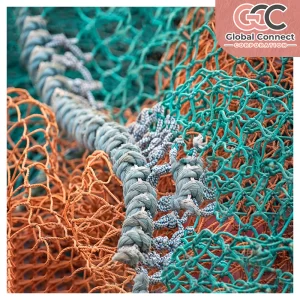
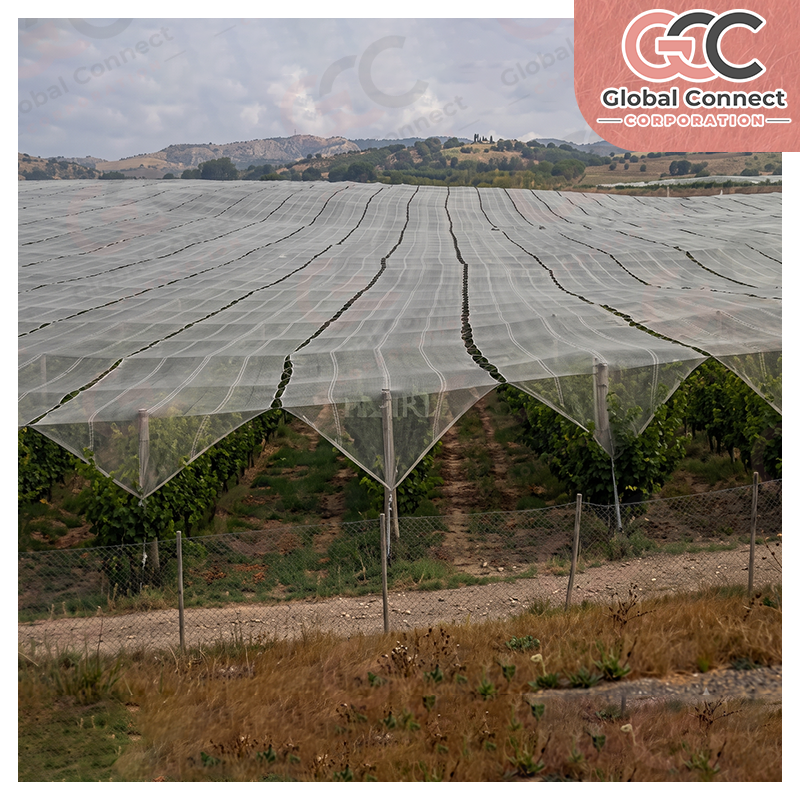
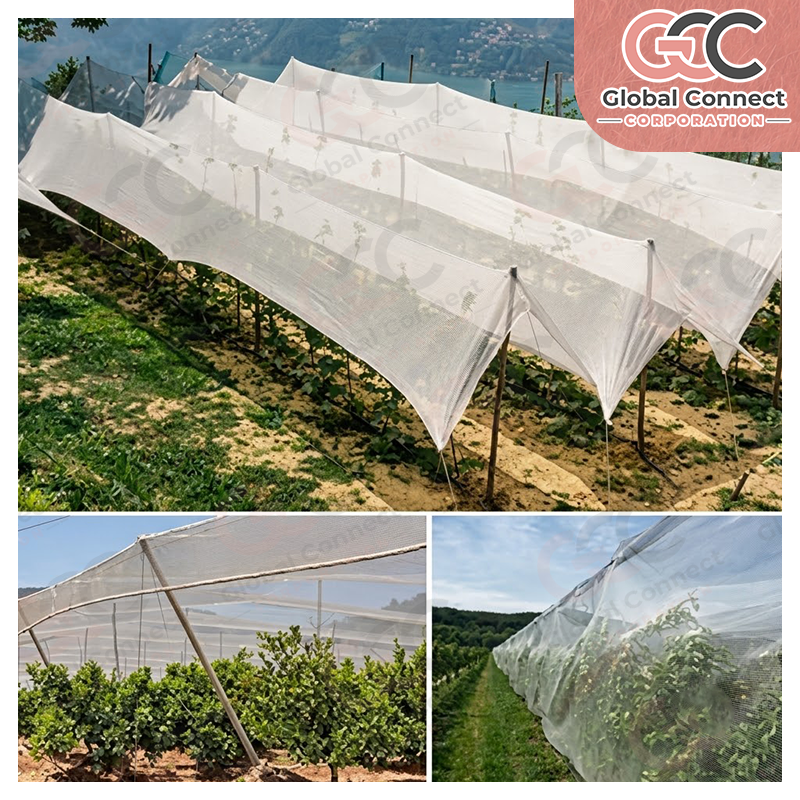
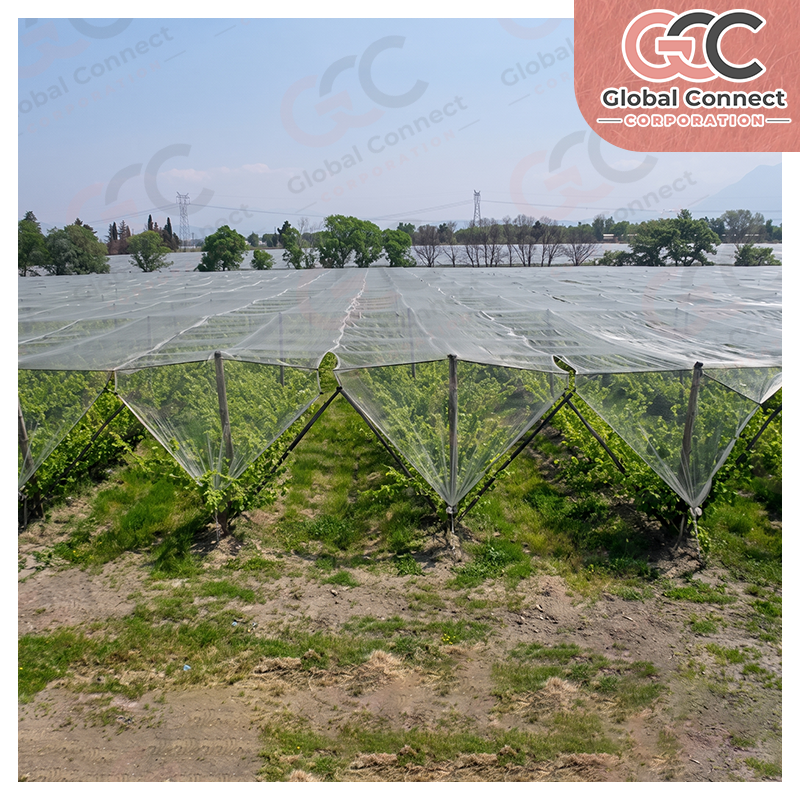
The knitted HDPE structure absorbs and distributes the impact energy of hailstones, reducing direct damage to fruits, leaves, branches, and young plants while helping preserve crop quality and yield.
2. Which crops benefit the most from Anti-Hail Nets?
Anti-Hail Nets are commonly installed in apple orchards, vineyards, cherry farms, pear orchards, citrus plantations, kiwi farms, berry cultivation, and commercial nurseries, where hail damage can result in significant financial losses.
3. Do Anti-Hail Nets affect sunlight reaching the crops?
High-quality Anti-Hail Nets are designed to provide crop protection while allowing sufficient sunlight and air circulation for healthy plant development. The level of light transmission depends on the net design and color selected.
4. Can Anti-Hail Nets also reduce wind damage?
Yes. Besides protecting against hail, Anti-Hail Nets can help reduce wind intensity around crops, minimizing branch breakage, fruit drop, and mechanical stress during adverse weather conditions.
5. Can GCC manufacture customized Anti-Hail Nets?
Yes. We offer customized roll widths, lengths, mesh designs, colors, reinforced edges, OEM branding, private labeling, and export packaging to suit different orchard layouts and project specifications.
6. What factors should buyers evaluate before purchasing Anti-Hail Nets?
Buyers should assess UV stabilization, tensile strength, impact resistance, mesh uniformity, installation requirements, expected service life, and compatibility with existing support structures before making a purchasing decision.
7. What quality inspections should buyers request before shipment?
International buyers typically request UV stability reports, tensile strength testing, mesh uniformity verification, roll dimension checks, weight consistency testing, and visual inspections to ensure product quality.
8. What market trends are driving demand for Anti-Hail Nets?
Increasing climate uncertainty, higher-value fruit production, agricultural insurance requirements, and investments in protected cultivation are accelerating the adoption of Anti-Hail Nets across commercial farming regions.
9. How can distributors improve profitability when importing Anti-Hail Nets?
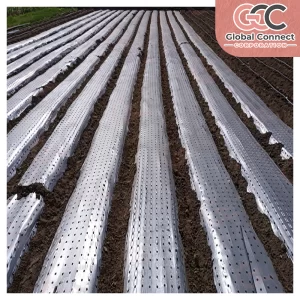
Distributors can maximize container efficiency by sourcing Anti-Hail Nets alongside Bird Protection Nets, Shade Nets, Anti-Insect Nets, Mulch Films, and Pond Liners, enabling broader product offerings while reducing freight costs.
10. Why do international buyers choose GCC for Anti-Hail Nets?
GCC combines high-performance virgin HDPE materials, precision knitting technology, consistent UV protection, strict quality assurance, flexible OEM manufacturing, and dependable export logistics, making us a trusted supplier for protected agriculture projects worldwide.