July 21, 2026
Why PVC Foam Boards Are Growing in Interior Projects in 2026 ?
How PVC Foam Boards Support Modern Interior Projects ? Modern interior projects demand materials that are lightweight, moisture-resistant, easy to...

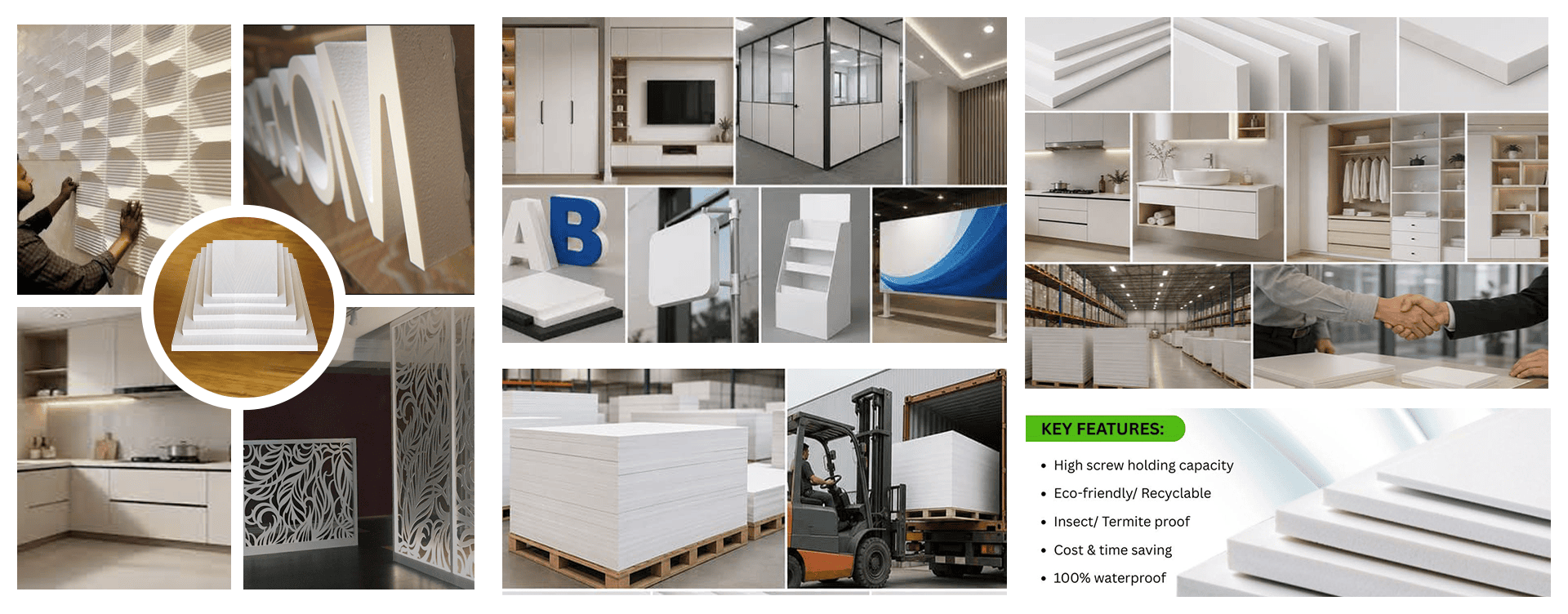
Why Future of PVC Foam Boards in Furniture, Signage & Interior Design ?
PVC foam boards are moving from a cost-effective alternative material to a mainstream choice across furniture, signage, and interior design industries. As global demand for lightweight, waterproof, and design-flexible materials grows, PVC foam boards are positioned to play a much larger role in how modern spaces and products are built.
For furniture manufacturers, signage companies, retail brands, and interior contractors, the future of PVC foam boards is shaped by rising performance expectations, sustainability pressure, price volatility, and growing use in commercial and residential projects worldwide.
The Market Outlook for PVC Foam Boards
The global PVC foam board market is on a clear growth path. Various market research estimates place the global market between USD 1.8 billion and USD 2.7 billion in the mid-2020s, with projections reaching approximately USD 3.8 billion by 2032 at a CAGR of around 5.3%.
The broader PVC foam sheet category is expected to expand from roughly USD 2.28 billion in 2024 to nearly USD 3.9 billion by 2035, growing at close to 5% CAGR, driven by construction, advertising, and furniture applications.
India’s PVC foam board market alone was valued at approximately USD 234 million in 2024 and is projected to reach USD 345 million by 2032, growing at a 6.7% CAGR, supported by infrastructure development and rising demand from advertising and interior design sectors.
| Market Metric | Value |
|---|---|
| Global PVC Foam Board Market (2025) | USD 2.7 billion |
| Projected Market (2032) | USD 3.8 billion |
| Global CAGR (2026 – 2032) | 5.3% |
| India PVC Foam Board Market (2024) | USD 234 million |
| India Projected Market (2032) | USD 345 million |
| India CAGR (2025 – 2032) | 6.7% |
However, 2026 has also brought sustained cost pressure. PVC foam board prices have risen approximately 20 – 28% globally due to petrochemical supply disruption, with prices moving from roughly USD 700 – 900 per tonne to USD 840 – 1,150 per tonne. This makes strategic sourcing and supplier reliability more important for the future of the category.
Why PVC Foam Boards Are Becoming the Material of the Future ?
PVC foam boards solve practical problems that traditional wood-based materials cannot always address. Their lightweight, waterproof, and termite-resistant properties make them well suited to industries under pressure to build faster, maintain lower costs, and reduce long-term material failure.
Core advantages driving future adoption :
These properties support long-term relevance across furniture, signage, and interior design applications, particularly in humid regions and fast-paced commercial projects.
Read More : View GCC PVC Foam Boards
The Future of PVC Foam Boards in Furniture
Furniture manufacturing is shifting toward materials that combine speed, consistency, and moisture resistance. PVC foam boards are expected to expand their role in several furniture categories over the coming years, especially where humidity, termite risk, or lightweight construction matter most.
Growing Furniture Applications :
As furniture brands look for materials that reduce warranty claims linked to swelling, warping, and termite damage, PVC foam boards are likely to see expanded use, particularly in mid-range and export-oriented furniture programmes.
For higher-density furniture-grade requirements, PVC Celuka boards will likely continue to complement foam boards in cabinetry, kitchen shutters, and structural panel components.
| Furniture Requirement | Material Trend |
|---|---|
| Lightweight, decorative panels | PVC Foam Board |
| Structural cabinetry and shutters | PVC Celuka Board |
| Wet-area and outdoor-adjacent furniture | WPC Board |
| Load-bearing furniture frames | Plywood |
Read More : View GCC PVC Celuka Boards
The Future of PVC Foam Boards in Signage
Signage remains one of the largest and fastest-growing application areas for PVC foam boards. The material’s smooth surface, print compatibility, and lightweight structure make it a preferred substrate for indoor and outdoor advertising.
Foam boards have broad applications in the creation of point-of-sale materials and promotional signs because they are lightweight and easy to install, and this trend is expected to continue as retail and event marketing grow.
Signage trends shaping future demand :
Because PVC foam boards are easy to cut into custom shapes, letters, and logos, they remain a practical choice for brand activation projects that need fast turnaround and consistent print quality.
The Future of PVC Foam Boards in Interior Design
Interior design is increasingly influenced by sustainability expectations, faster project timelines, and demand for design flexibility. PVC foam boards are positioned to expand further into decorative and functional interior applications.
Emerging interior design applications :
Designers are also using PVC foam boards creatively with wood-grain films, high-gloss finishes, matte textures, and metallic laminates to replicate premium looks at a lower cost and weight than traditional materials.
Read More : How to Source High-Gloss and Matt Finishes PVC Panels ?
Sustainability and Technological Innovation
The PVC industry is undergoing what industry reports describe as a green transformation, with global PVC film and sheet markets expected to exceed USD 40 billion in 2025, driven partly by environmental policy and recyclable technology investment.
Manufacturers are increasingly focused on plasticizer-free formulations, bio-based additives, and recyclable PVC compounds to meet tightening environmental regulations across more than 60 countries with plastic restrictions.
This shift is significant for the future of PVC foam boards because :
Buyers sourcing PVC foam boards for export markets, especially the EU and Gulf regions, should expect stronger certification requirements in the coming years.
Price Volatility and What It Means for Buyers
While demand is growing, the PVC foam board supply chain has faced significant disruption in 2026. Petrochemical feedstock costs, geopolitical tension, and freight volatility have pushed prices up 20 – 30% across most markets, with a 3mm board that once cost USD 8 – 10 per sheet now trading meaningfully higher in many regions.
This means the future of PVC foam boards will be shaped as much by supply chain resilience as by product innovation. Buyers who consolidate orders, diversify sourcing origins, and lock in longer-term supplier relationships will be better positioned to manage cost fluctuations.
Strategies for managing future price volatility :
Read More : How to Import PVC & WPC Products at Lower Cost During War ?
PVC Foam Board vs Alternative Materials: The Long-Term View
As the market matures, buyers are expected to use PVC foam boards alongside – not instead of – other panel materials, choosing the right product for each specific application.
| Material | Best Long-Term Role |
|---|---|
| PVC Foam Board | Lightweight signage, decor panels, wet-area furniture components |
| PVC Celuka Board | Furniture-grade cabinetry and modular kitchen panels |
| WPC Board | Outdoor and wet-area furniture, decking substrates |
| Plywood | Structural, load-bearing furniture frames |
| MDF | Painted and routed dry-area furniture |
This multi-material approach is likely to define the next phase of furniture and interior manufacturing, where designers and manufacturers select materials based on precise performance requirements rather than defaulting to a single panel type.
Read More : Why WPC Doors Are Replacing Wooden Doors ?
How Global Connect Corporation Supports the Future of PVC Sourcing ?
Global Connect Corporation (GCC) is one of India’s leading exporters, suppliers, and manufacturers of PVC Boards, serving furniture manufacturers, distributors, and importers across the Gulf, Africa, Europe, and Southeast Asia.
GCC supplies a complete portfolio for furniture, cabinetry, interiors, retail projects, and building applications. Buyers can consolidate PVC foam boards with Celuka boards, WPC boards, laminates, edge banding, plywood, furniture hardware, glass fittings, and other products in one structured export programme.
GCC PVC and Interior Product Range
| Category | Products | Explore |
|---|---|---|
| PVC Foam Boards | Lightweight, waterproof boards for furniture, signage and interiors | View PVC Foam Boards → |
| PVC Celuka Boards | High-density furniture-grade PVC boards | View PVC Celuka Boards → |
| WPC Boards | Wood-plastic composite boards for wet areas and outdoor use | View WPC Boards → |
| PVC Laminates | Decorative sheets for furniture and interiors | View PVC Laminates → |
| PVC Edge Banding | Edge tapes for furniture and cabinetry | View PVC Edge Banding → |
| PVC Products Range | Full PVC portfolio for furniture and interiors | View PVC Products → |
Inquire with GCC Today
If you are sourcing PVC foam boards, PVC Celuka boards, WPC boards, laminates, edge banding, or complete interior material ranges for furniture, signage, or interior design projects, GCC offers a structured international sourcing solution.
GLOBAL CONNECT CORPORATION (GCC)
Mail : [email protected]
Website : www.gccoverseas.com
Contact : +91 99785 55485





 0
0
 0
0 0
0 0
0