Product Details
Our Bricks & Blocks range offers robust and sustainable solutions for modern construction needs. Clay bricks deliver traditional durability with high compressive strength and thermal insulation, perfect for lasting residential and commercial buildings. Fly ash bricks provide an eco-friendly alternative with excellent strength and consistent quality.
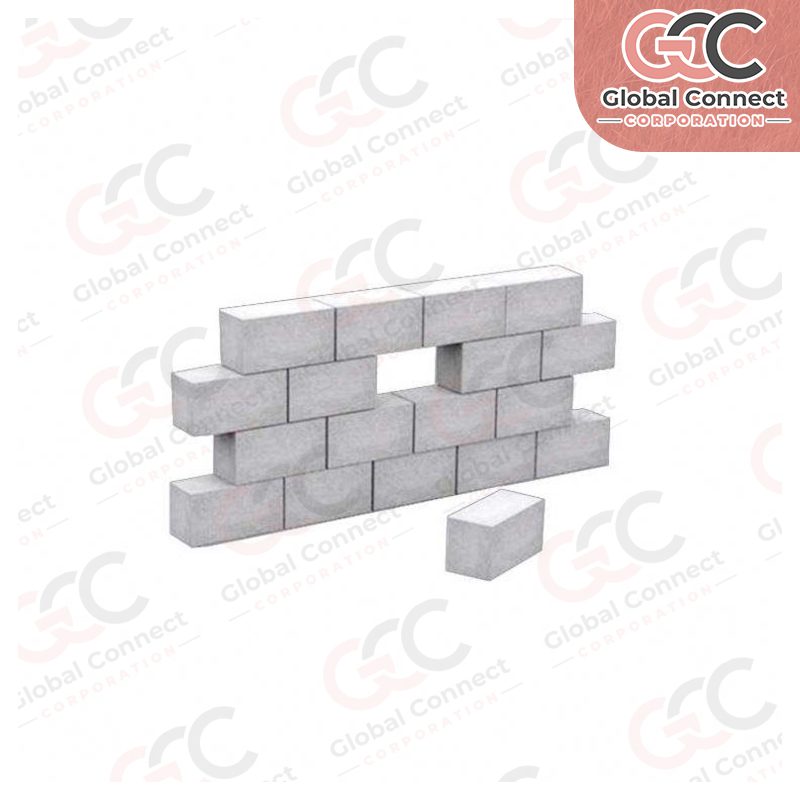
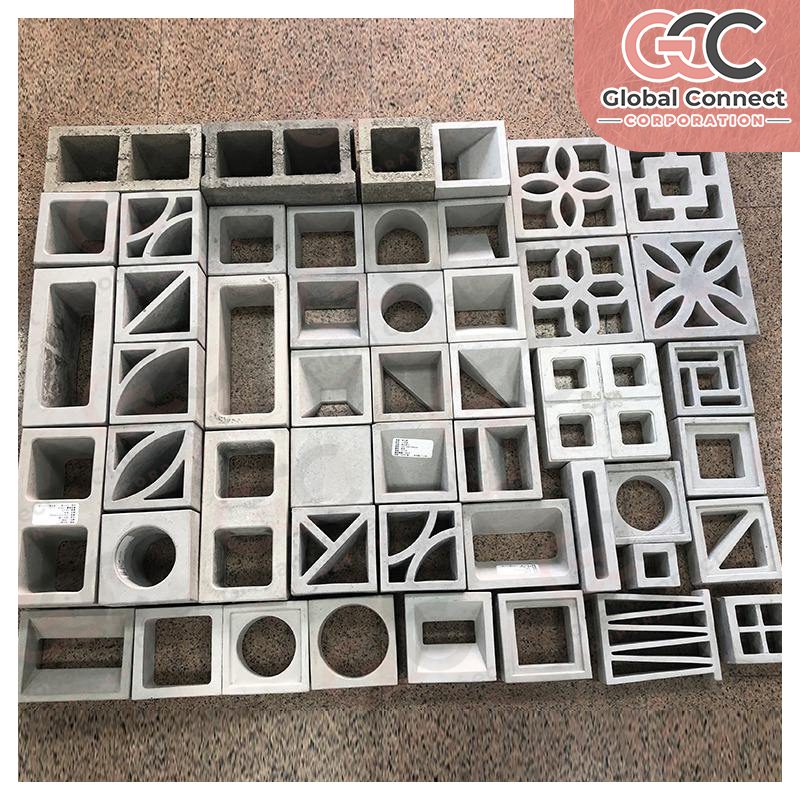
Concrete blocks, available in solid and hollow forms, ensure efficient, soundproof, and resilient masonry. AAC blocks bring the benefits of lightweight construction combined with superior thermal performance and fire resistance, catering to growing demands for green building materials. All products meet stringent international standards and certifications, making them trusted choices in global construction markets.
Product Types & Variants: Clay bricks, fly ash bricks, concrete blocks (solid and hollow), AAC blocks
Material Options: Natural clay, fly ash, cement, sand, lime, stone dust, aluminum powder (for AAC blocks)
Sizes & Configurations: Clay and fly ash bricks (190x90x90 mm), concrete blocks (400x200x200 mm), AAC blocks (600x200x100/150/200 mm)
Performance Specs: High compressive strength, low water absorption, termite and fungus resistance, dimensional stability, thermal insulation
Finish / Colour Options: Smooth, textured, sharp edges, painted finishes (on request)
Compliance & Certifications: IS 1077, IS 12894, IS 2185, BS, EN, ASTM standards, LEED certified (optional), CE marking
Applications: Load-bearing and non-load-bearing walls, facades, partitions, pavements, industrial and residential construction
Packaging: Palletized bundles with shrink wrapping and moisture protection
MOQ & Lead Time: Typically 50 sheets per order; lead time 2–4 weeks
Frequently Asked Questions – Blocks & Bricks
How do developers decide between AAC blocks, concrete blocks, and clay bricks?
The choice depends on structural design, wall thickness, construction speed, thermal performance, and project budget. Many developers use different masonry materials for different parts of the same project.
Why are AAC blocks becoming popular for large housing projects?
Their lightweight construction helps speed up wall installation, reduce handling effort, and improve construction efficiency on multi-unit residential developments.
How do contractors calculate pallet and truck requirements before ordering?
Procurement teams usually plan deliveries based on block size, wall quantity, pallet configuration, and site storage capacity to keep construction moving without unnecessary stock buildup.
Which masonry products are commonly used for boundary walls and industrial compounds?
Concrete blocks and selected brick formats are widely used for boundary walls, warehouses, factories, and industrial developments where durability and efficient construction are important.
Which industries generate the strongest demand for blocks and bricks?
Residential housing, commercial buildings, industrial facilities, schools, hospitals, warehouses, infrastructure projects, and government developments continue to drive demand across Asia, the Gulf, Europe, and Africa.
How do builders reduce mortar consumption during masonry work?
Choosing uniform masonry units with consistent dimensions helps improve joint alignment, reduce material waste, and support faster wall construction.
What should importers verify before placing bulk block and brick orders?
Professional buyers typically review dimensional consistency, compressive strength, moisture condition where applicable, pallet packaging, and loading efficiency before approving export shipments.
Can blocks and bricks support fast-track construction projects?
Yes. Many contractors select masonry products that simplify handling, improve laying speed, and help maintain productivity across large construction sites.
What trends are increasing demand for modern masonry products?
Affordable housing, industrial warehousing, sustainable construction, prefabricated building systems, and energy-efficient wall solutions continue to increase demand across Asia, the Gulf, Europe, and Africa.
How does GCC support developers and distributors with masonry supply?
GCC supplies export-quality blocks and bricks with customized specifications, OEM and private-label manufacturing, project-based bulk supply, and dependable delivery for large-scale construction programs across Asia, the Gulf, Europe, and Africa.