July 21, 2026
Future of PVC Foam Boards in Furniture, Signage & Interior Design
Why Future of PVC Foam Boards in Furniture, Signage & Interior Design ? PVC foam boards are moving from a...

Biggest Challenges Global Importers Face in 2026
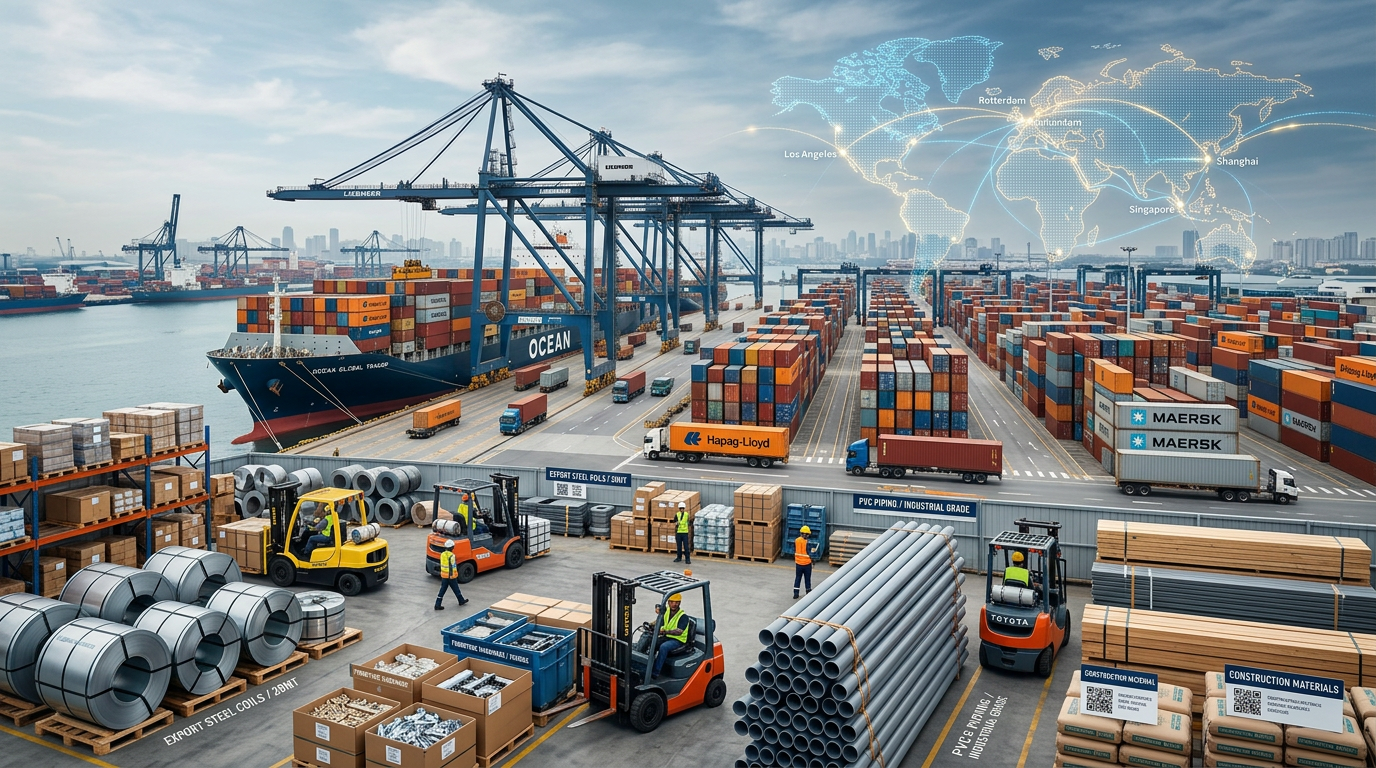
Global trade in 2026 is no longer operating under normal conditions. Importers across the Gulf, Europe, Africa, and Southeast Asia are facing rising pressure from shipping disruptions, geopolitical conflicts, inflation, volatile freight costs, and supply chain uncertainty.
What used to be a simple sourcing process has now become a highly strategic operation.
Today, importers are not just buying products. They are managing geopolitical risk, logistics uncertainty, supplier reliability, pricing volatility, customs compliance, inventory pressure, and working capital risk all at once.
For many businesses, one delayed shipment can stop projects, impact customers, and damage profitability. The stakes have never been higher for international buyers.
The Global Import Landscape Has Changed Dramatically
International trade volumes continue growing despite the turbulence. Global merchandise trade is expected to cross $33 trillion in 2026, yet logistics and procurement costs remain significantly higher than pre-2020 levels.
Between 2020 and 2026, global supply chains experienced continuous disruption after disruption. What began with pandemic-era logistics bottlenecks has evolved into a broader structural shift in international trade.
Today’s importers must navigate shipping instability, regional conflicts, fluctuating freight costs, customs compliance changes, supplier inconsistency, and working capital pressure simultaneously. This has fundamentally changed how global sourcing works.
At the same time, buyers are expected to maintain faster delivery timelines, lower inventory risk, stable pricing, and consistent quality – all while operating in an environment where none of these variables are stable.
Major Global Trade Disruptions in 2026 :
| Global Factor | Importer Impact | Severity Level |
|---|---|---|
| Red Sea shipping crisis | Longer transit times (14 to 20 days added) | High |
| US-Iran tensions | Oil and freight price volatility | High |
| Strait of Hormuz disruption | 20 percent of global petrochemicals affected | Critical |
| CBAM regulations | Compliance pressure for EU-bound goods | Medium |
| China Plus One sourcing shift | Supplier transition complexity | Medium |
| Container shortages | Freight inflation and booking delays | High |
| Global inflation | Rising landed cost across all categories | High |
| Currency volatility | Payment uncertainty and margin erosion | Medium |
Importers are now operating in one of the most volatile sourcing environments seen in decades. The biggest problem is that predictability is gone.
In previous years, buyers could estimate production timelines, freight cost, shipping schedules, customs clearance, and landed pricing with reasonable accuracy. Today, all five variables change constantly – sometimes weekly, sometimes daily.
This unpredictability is now the single biggest challenge global importers face in 2026.
Read More About GCC’s PVC Product Range
The Biggest Challenges Importers Face in 2026
Challenge 1 : Freight Cost Volatility
Freight has become one of the biggest variables – and risks – in international trade. The Red Sea crisis and rerouting through the Cape of Good Hope continue impacting shipping schedules. What was once a predictable 25-day transit from Asia to Europe is now 40 to 45 days with constant uncertainty.
| Freight Challenge | Typical Importer Impact |
|---|---|
| Red Sea rerouting | 14 to 20 days additional transit time |
| Container shortage | Higher booking cost; delayed dispatch |
| Fuel price increase | Surcharges of $1,800 to $3,800 per container |
| War-risk insurance | Higher landed cost (2 to 5 times prior rates) |
Asia-to-Gulf freight rates increased 30 to 70 percent during peak disruption periods.
Why this matters for your business ?
How to mitigate : Consolidate products into full containers, book freight early, and build buffer into delivery timelines.
Challenge 2 : Supplier Reliability
A supplier sending quotations is not the same as a supplier capable of execution. Many importers continue sourcing through random traders and unverified suppliers who lack operational infrastructure for consistent export execution.
| Supplier Problem | Commercial Risk |
|---|---|
| Delayed production | Project disruption; penalty clauses |
| Inconsistent quality | Customer complaints; return costs |
| Weak packaging | Transit damage; insurance claims |
| No export systems | Documentation delays; customs holds |
In 2026, reliable suppliers are becoming more valuable than cheap suppliers.
Why this matters for your business : A supplier quoting 10 percent below market but delivering 30 days late has cost you more than the 10 percent savings. The real cost includes project delays, penalties, inspection time, and management attention.
How to ensure reliability : Request factory audits, start with trial orders, and work with structured export partners.
Challenge 3 : Quality Inconsistency
Quality inconsistency remains one of the biggest hidden costs in global trade. Many importers focus only on unit pricing. The real losses appear after the container arrives.
| Quality Issue | Business Impact |
|---|---|
| Shade variation (tiles, laminates) | 100 percent reordering cost plus project delay |
| Dimension inconsistency (hardware) | Field modification labor 2 to 3 times normal |
| Weak packaging | 5 to 15 percent product loss |
| Rusting or corrosion | Complete batch rejection plus air freight cost |
Why this matters for your business : A container of handles with inconsistent plating requires 100 percent inspection before use. Rusted hinges in coastal markets like Dubai or Mombasa means writing off the entire shipment. The cost of poor quality is always higher than the cost of good quality.
How to ensure quality : Order pre-production samples, use third-party inspection, and request Certificates of Analysis.
Challenge 4 : Geopolitical Instability
Global trade routes are under pressure in multiple regions simultaneously. The US-Iran conflict, Red Sea disruptions, and Strait of Hormuz tensions continue affecting cargo movement globally.
| Geopolitical Factor | Impact | Mitigation Difficulty |
|---|---|---|
| Shipping route disruption | Delayed cargo; rerouting costs | High |
| Insurance increases | 2 to 5 times higher premiums | Low |
| Currency volatility | Pricing instability | Medium |
| Sanctions | Payment delays | High |
Why this matters for your business : A shipment booked via the Red Sea may be rerouted around Africa mid-journey, adding 15 to 20 days and $20,000 in unexpected costs. Insurance quotes valid for 30 days may double before departure.
How to navigate : Build 2 to 4 weeks of buffer into timelines and choose suppliers with routing flexibility.
Challenge 5 : Working Capital Pressure
Longer lead times mean cash remains blocked for extended periods.
| Financial Pressure Point | Impact |
|---|---|
| Longer transit time (15 to 25 days added) | Cash blocked 15 to 25 percent longer |
| Inventory buildup | Storage costs up 10 to 20 percent |
| Freight spikes | Margin erosion 5 to 15 percent |
Why this matters for your business : A distributor who turned inventory 6 times per year now turns it 4 times. Every extra week of transit is a week of unproductive working capital.
How to manage : Negotiate better payment terms, consolidate shipments, and forecast inventory needs accurately.
Challenge 6 : Currency Volatility
The US dollar has strengthened against most emerging market currencies.
| Currency Factor | Impact | Mitigation |
|---|---|---|
| USD strengthening | Higher import cost in local currency | Hedge forward contracts |
| Local currency weakness | Margin pressure | Invoice in USD |
| Banking restrictions | Payment delays | Multiple banking relationships |
Why this matters for your business : A 5 percent currency movement against your local currency can erase your entire margin. If your local currency weakened 8 percent by the time you paid your supplier, you have lost money on that order.
How to manage : Use forward contracts, invoice in USD, and work with trade finance advisors.
Challenge 7 : Finding Reliable Long-Term Partners
The biggest challenge in 2026 is not finding suppliers. It is finding reliable partners.
| What Importers Need ? | Why It Matters ? |
|---|---|
| Stable supply | Avoids project disruptions |
| Export coordination | Reduces operational burden |
| Consolidation support | Lowers freight cost |
| Quality consistency | Protects brand reputation |
| Long-term reliability | Enables planning and forecasting |
Why this matters for your business : The cheapest supplier this month may disappear next month. A long-term partner who invests in quality is worth paying slightly more. The cost of switching suppliers – qualification, testing, documentation – is substantial.
How to find reliable partners : Look for verified manufacturing units, export track records, and proven shipments.
Direct Impact on Building Materials, Hardware and Construction Products
The challenges described above are not abstract economic concepts. They are directly impacting the products we sell and the prices our buyers pay.
Global Connect Corporation (GCC) supplies a diversified portfolio across multiple categories including steel, furniture hardware, construction chemicals, PVC products, laminates, plywood, tiles, cement, plasticware, jute bags, and disposables.
Here is how each category is being affected in 2026.
Impact on Steel and Structural Products
India’s steel exports surged 35.9 percent year-on-year to 6.6 million tonnes in the financial year ending March 2026, yet price stability remains elusive for international buyers.
Multiple factors are driving steel prices higher across global markets.
What this means for importers : A container of steel plates (IS2062 grade) that cost 580 to 600 US dollars per ton on a free-on-board basis in late 2025 now lands at 650 to 710 US dollars per ton on a cost-and-freight basis in many destinations.
This represents a 12 to 17 percent increase in landed cost before any other factors are considered. Structural steel, hot-rolled and cold-rolled sheets, and galvanized iron sheets have seen similar pressure, with galvanized products up over 7 percent in early 2026 alone.
For a construction project requiring 500 tons of steel, this translates to an additional 35,000 to 50,000 US dollars in material cost – directly impacting project profitability.
Read More About GCC’s Steel Product Range
Impact on Furniture Hardware
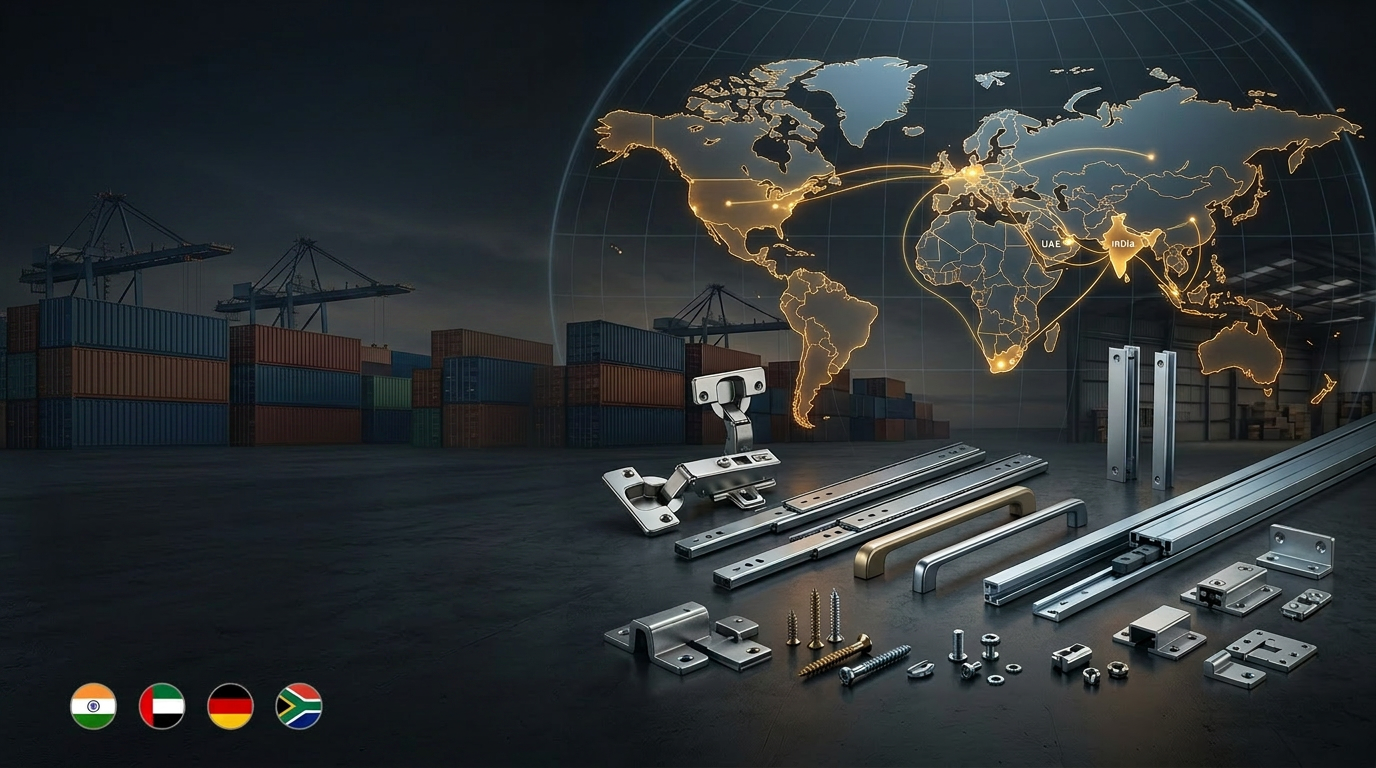
The furniture hardware market – encompassing hinges, drawer slides, handles and knobs, and casters – is facing severe pressure from multiple directions simultaneously.
What this means for importers : A standard soft-close hinge that cost 0.45 to 0.55 US dollars on a free-on-board basis in 2025 is now 0.55 to 0.70 US dollars. This represents a 20 to 27 percent increase.
Multiplied across 50,000 units for a modular kitchen project, this erodes margins by 5,000 to 7,500 US dollars per container. Drawer slides, cabinet handles, and furniture connectors have experienced similar inflationary pressure.
Impact on Construction Chemicals
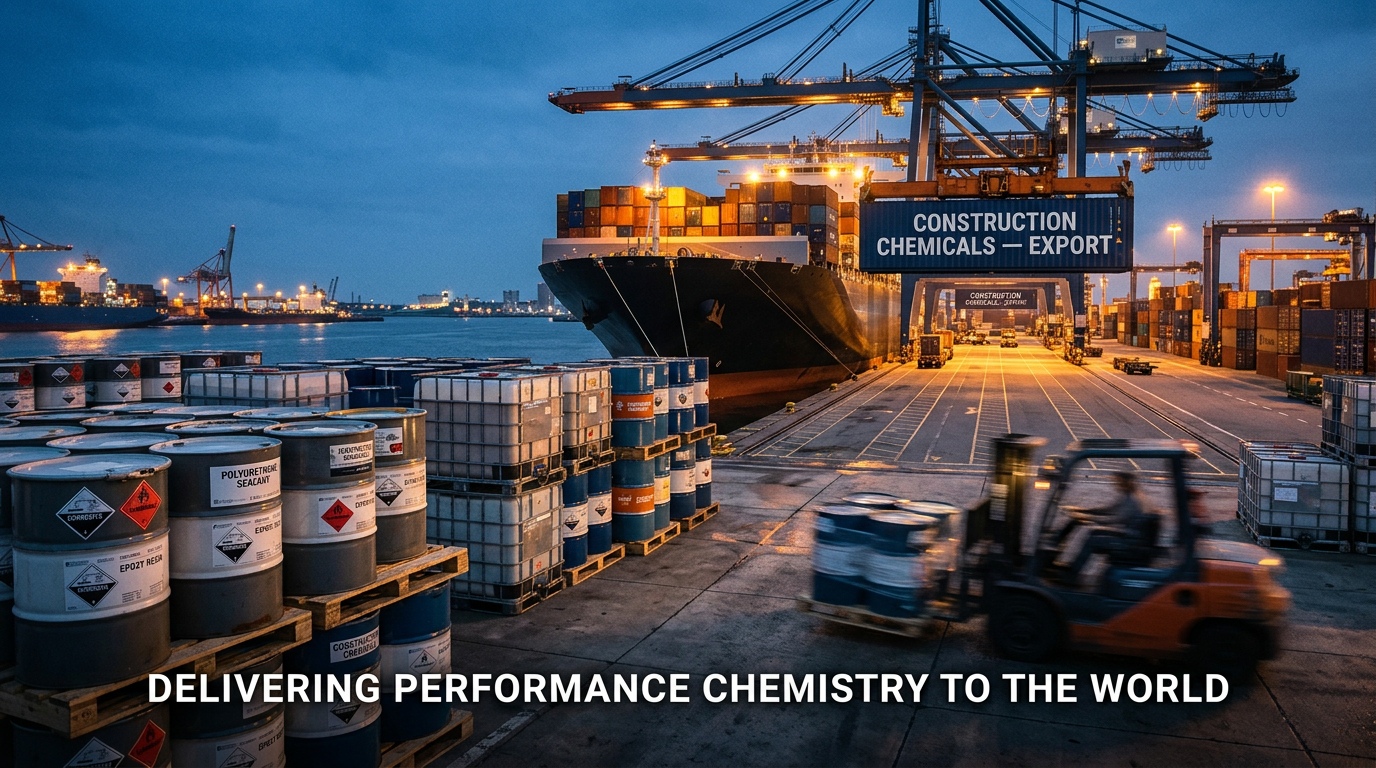
Construction chemicals – including waterproofing systems, tile adhesives, grouts, and sealants – are among the most severely affected categories in the entire building materials sector.
What this means for importers : A polyurethane waterproofing membrane that cost 2.50 to 3.00 US dollars per kilogram on a free-on-board basis now ranges from 3.50 to 4.50 US dollars per kilogram.
Tile adhesive formulations with redispersible polymer powder have seen similar pressure, with 25 kilogram bag prices rising from 6 to 8 US dollars to 7.50 to 10 US dollars. Concrete admixtures, bonding agents, and repair mortars have all experienced feedstock-driven inflation ranging from 15 percent to 40 percent.
For a mid-sized infrastructure project using 100 tons of waterproofing membrane, this represents an additional 100,000 to 150,000 US dollars in material cost.
Read More About GCC’s Construction Chemical Range
Impact on PVC and WPC Products
PVC products – including foam boards, pipes, edge banding, and WPC boards – are facing severe feedstock-driven inflation.
What this means for importers : PVC foam board prices have increased 20 to 30 percent across most markets. A 3 millimeter thick board that cost 8 to 10 US dollars per sheet now ranges from 10 to 13 US dollars per sheet.
SPC flooring and WPC doors have seen similar pressure. PVC edge banding prices have increased 15 to 25 percent, affecting furniture and cabinet manufacturers who use these products in high volume.
Read More About GCC’s PVC Pipe/Fitting Range
Impact on Laminates and Plywood
Wood-based panels are facing a different but equally challenging set of pressures.
Marine plywood prices have increased 15 to 20 percent year-on-year. HPL laminate prices are up 10 to 15 percent depending on thickness and finish, with premium finishes seeing even steeper increases.
Shuttering plywood, BWR plywood, and compact laminates have all seen cost increases passed down the supply chain. For a furniture manufacturer using 5,000 sheets of plywood annually, this represents an additional 20,000 to 35,000 US dollars in material cost.
Read More About GCC’s Laminates Product
Impact on Tiles, Cement and Stone
Even traditional building materials have not been spared from the inflationary pressure.
Ceramic tiles, vitrified tiles, and marble shipments face both price pressure (10 to 15 percent increases) and scheduling uncertainty. Granite and sandstone have seen similar trends, with container availability becoming a primary constraint.
Read More About GCC’s Tiles Product Range
Price Impact Summary : GCC Product Portfolio (2025 vs 2026)
The table below summarizes the estimated price increases across our key product categories.
| Product Category | 2025 Typical Price (FOB) | 2026 Typical Price (FOB) | Estimated Increase |
|---|---|---|---|
| Steel Plates (IS2062, 16mm) | $580 to $600 per ton | $650 to $710 per ton | 12 to 18 percent |
| Soft-Close Hinges (per piece) | $0.45 to $0.55 | $0.55 to $0.70 | 20 to 27 percent |
| Drawer Slides (heavy-duty pair) | $2.80 to $3.50 | $3.30 to $4.20 | 18 to 20 percent |
| Polyurethane Waterproofing (per kilogram) | $2.50 to $3.00 | $3.50 to $4.50 | 40 to 50 percent |
| PVC Foam Board (3mm sheet) | $8 to $10 | $10 to $13 | 20 to 30 percent |
| Marine Plywood (18mm sheet) | $28 to $35 | $32 to $42 | 15 to 20 percent |
| Tile Adhesive (25kg bag) | $6 to $8 | $7.50 to $10 | 20 to 25 percent |
| Ceramic Tiles (per square meter) | $4 to $6 | $4.50 to $7 | 10 to 15 percent |
| HPL Laminates (per sheet) | $12 to $18 | $14 to $21 | 15 to 18 percent |
| PVC Pipes (per meter, 4-inch) | $2.20 to $2.80 | $2.60 to $3.40 | 18 to 22 percent |
Note : Prices are indicative ranges based on market conditions as of May 2026. Actual pricing varies by volume, specification, finish, and destination. Please contact GCC for current quotes on specific products.
What Smart Importers Are Doing in 2026 ?
Leading importers are changing their sourcing strategy in response to these challenges. Instead of focusing only on low prices, they are prioritizing reliable supply chains, verified exporters, long-term partnerships, freight optimization, and multi-product consolidation.
| Consolidation Benefit | Impact on Business |
|---|---|
| Fewer shipments | Lower freight exposure |
| Optimized containers | Reduced landed cost |
| Centralized sourcing | Easier coordination |
| Fewer suppliers | Lower operational risk |
| Combined documentation | Smoother customs clearance |
Where Global Connect Corporation (GCC) Fits ?
Global Connect Corporation (GCC) is a structured export partner serving buyers across Gulf, Africa, Europe, and beyond. We operate through verified manufacturing networks – not as a commission-based intermediary.
GCC at a Glance :
| Metric | GCC Capability |
|---|---|
| Verified Manufacturing Units | 200+ |
| Export Shipments Executed | 500+ |
| Countries Supplied | 12+ |
“We supply, ship, and deliver with complete accountability – not as a marketplace or agent.”
How GCC Helps You Overcome 2026 Challenges ?
| Importer Challenge | GCC Solution |
|---|---|
| Freight volatility | Container consolidation saves 15 to 25% freight cost |
| Supplier fragmentation | One vendor for hardware, steel, chemicals, laminates |
| Quality inconsistency | Third-party inspection; COA and TDS documentation |
| Documentation complexity | Complete export documentation; customs compliance |
| Finding reliable partners | 500+ shipments executed; proven track record |
Why Importers Choose GCC ?
Citations & Market References :





 0
0
 0
0 0
0 0
0