Product Details
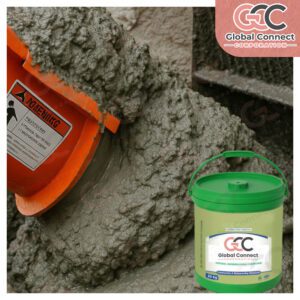
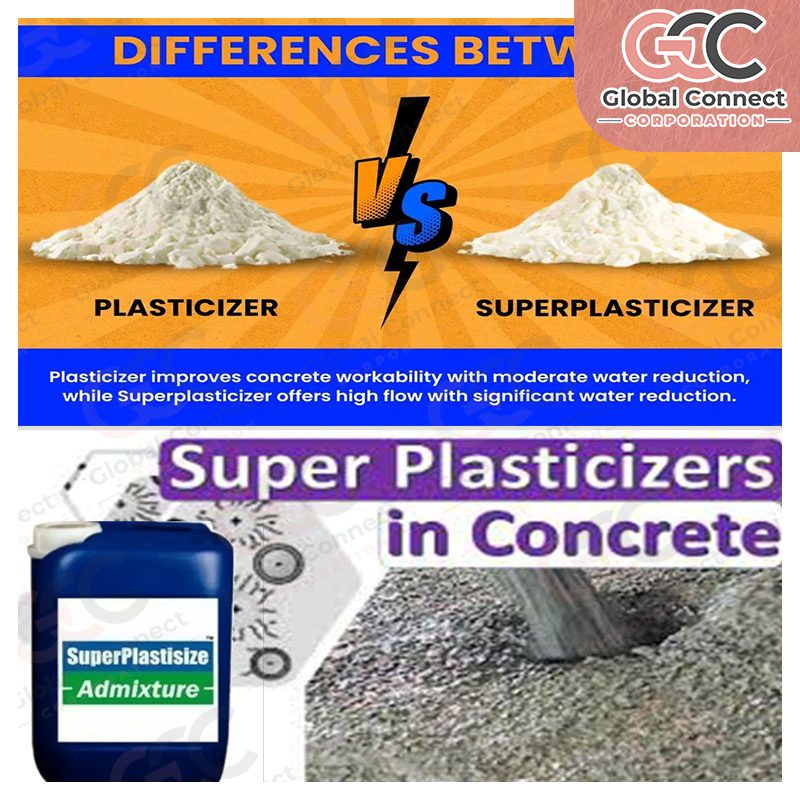
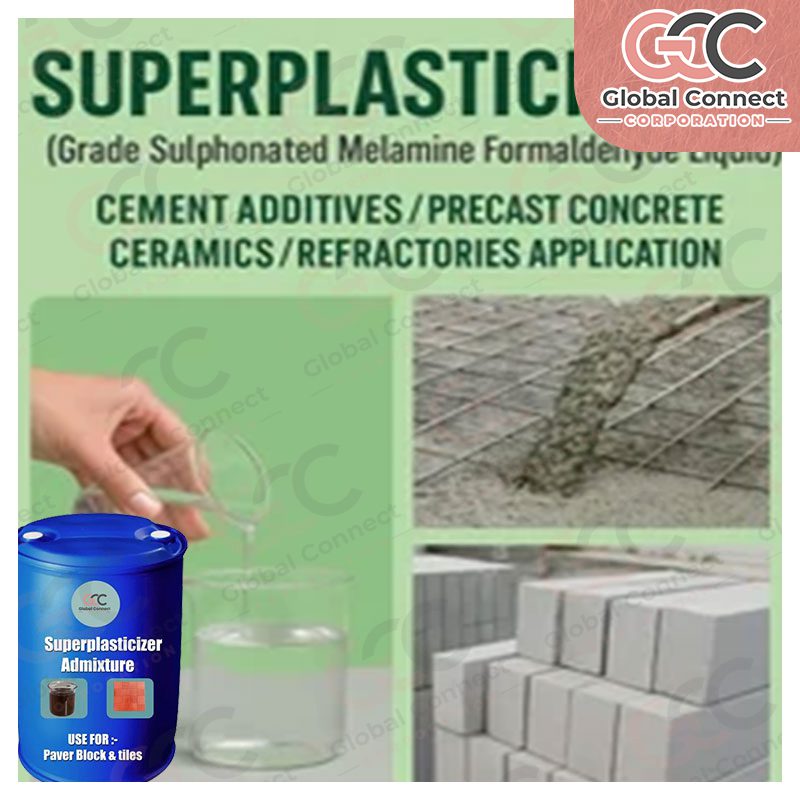
Our Plasticizers & Superplasticizers improve concrete water reduction and workability for a wide range of applications, from ordinary to high-performance concrete. Utilizing advanced polycarboxylate ethers (PCE) and sulfonated naphthalene formaldehyde (SNF) chemistries, these admixtures reduce water demand, boost strength and durability, and enhance flowability and surface finish, suitable for ready-mix, precast, pumped concrete, and architectural uses.
Product Types: Standard plasticizers and high-range superplasticizers including PCE, SNF, lignosulfonates
Materials: Available in liquid and powder forms suited for various cement types
Performance: Water reduction up to 10% (plasticizers) and 35% (superplasticizers), excellent slump retention, enhanced workability
Compatibility: OPC, PPC, blended, and composite cements, compatible with other construction chemicals
Special Features: Improves concrete flow without segregation, increases strength, reduces shrinkage and cracking, enhances pumpability and finish
Packaging: Drums (20L, 200L), totes (1000L), bulk supply
MOQ: 200 liters or equivalent per variant
Lead Time: 1–2 weeks depending on order size and type
Frequently Asked Questions – Concrete Plasticizers
How do plasticizers help reduce cement consumption without affecting concrete performance?
Plasticizers improve workability while reducing the amount of mixing water required, allowing producers to optimize cement usage without compromising concrete quality when the mix is properly designed.
Why do batching plants monitor slump consistency when using plasticizers?
Consistent slump helps maintain uniform concrete quality across multiple batches, improves pumping performance, and reduces rejected loads during large-scale production.
Which projects benefit most from conventional plasticizers?
Residential buildings, commercial projects, industrial floors, foundations, precast components, and reinforced concrete structures commonly use plasticizers to improve workability and placement efficiency.
Can plasticizers improve concrete finishing for flooring applications?
Yes. Improved workability helps contractors achieve smoother surface finishing, easier screeding, and more consistent results on concrete floors and slabs.
How do contractors prevent segregation when using plasticizers?
Proper dosage, balanced mix design, and controlled batching practices help improve concrete flow while maintaining aggregate stability during placement.
What should buyers verify before approving a plasticizer for production?
Professional buyers typically evaluate water reduction performance, slump retention, setting time, cement compatibility, compressive strength development, and dosage consistency before large-scale use.
How do plasticizers improve concrete pumping over longer distances?
By improving flow characteristics and reducing internal friction, plasticizers help concrete move more efficiently through pumping equipment, especially on multi-storey and infrastructure projects.
What trends are increasing demand for concrete plasticizers?
Faster construction schedules, ready-mix concrete adoption, precast manufacturing, and high-rise development continue to increase demand across Asia, the Gulf, Europe, and Africa.
Can GCC develop plasticizer formulations for different cement types?
Yes. GCC supports OEM manufacturing and customized plasticizer formulations designed to work with different cement types, aggregate combinations, and regional construction requirements.
Why do ready-mix producers and contractors build long-term partnerships with GCC for concrete plasticizers?
GCC combines manufacturing excellence, export-quality production, product innovation, OEM manufacturing capabilities, and dependable global delivery to support batching plants, distributors, contractors, and infrastructure projects across Asia, the Gulf, Europe, and Africa.