Product Details
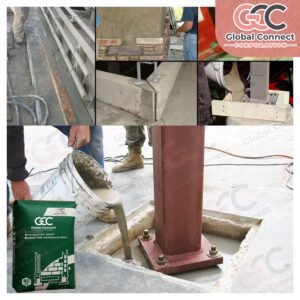
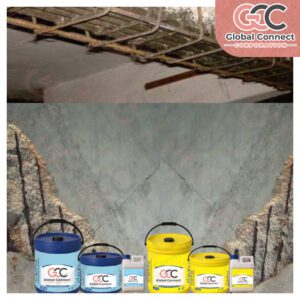
Polymer and resin repair mortars deliver durable, high-performance repairs essential for restoring concrete infrastructure and architectural surfaces. Offering strong adhesion, flexibility, and crack resistance, these mortars reduce future damage and improve impermeability. Suitable for vertical and overhead applications, they enable reliable patching and strengthening across civil, industrial, and commercial projects.
Product Types: Single- and two-component polymer-modified repair mortars including microconcretes and ready-mix blends
Materials: Pre-mixed powders or dual-component kits with polymer or resin additives
Performance: High compressive (>30 MPa) and flexural strength; excellent adhesion; non-shrink; fast setting; durable and crack resistant
Compatibility: Suitable for structural repairs of beams, columns, slabs, spalled concrete patching, void filling, overlays
Special Features: Waterproof, flexible, reduced rebound during application, ideal for vertical and overhead repairs
Packaging: Typically 40kg bags or dual-component kits
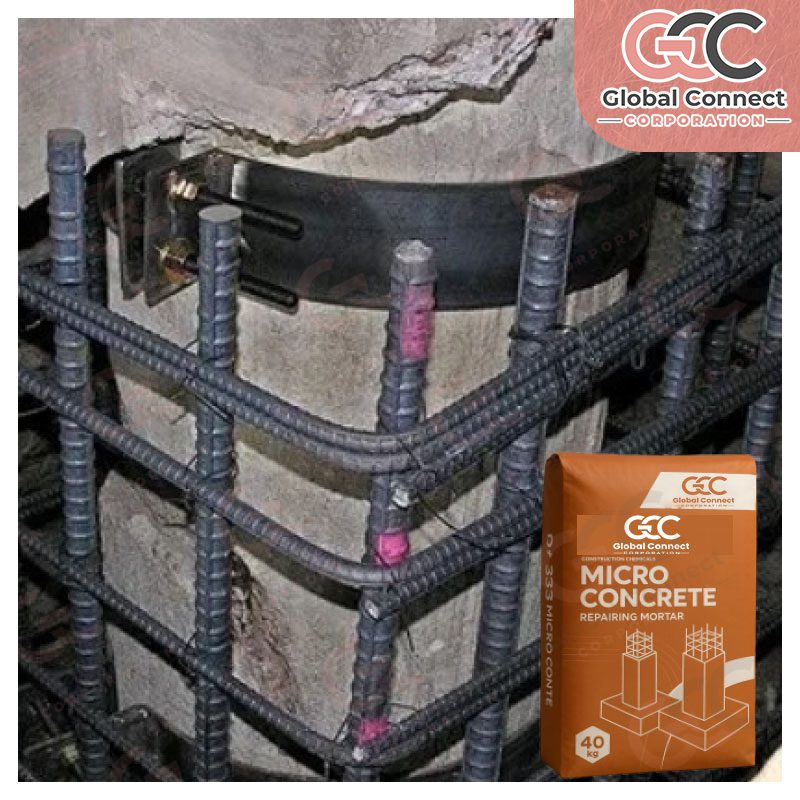
Applications: Repairing damaged reinforced/non-reinforced concrete, honeycombs, cracks, jacketing RCC columns, overlays, resurfacing
Mixing and Application: Mix with water or polymer additives; application by trowel or spray
Shelf Life: 12 months sealed and stored dry
Standards Compliance: ASTM C928, EN 1504, IS 12330
Frequently Asked Questions – Polymer Mortars
Why do industrial flooring contractors choose polymer mortars for concrete repairs?
Polymer mortars provide stronger adhesion, improved abrasion resistance, and better durability than conventional cement mortar, making them ideal for repairing warehouse floors, loading bays, and production facilities exposed to constant traffic.
How do contractors rebuild damaged concrete edges without repeated failures?
Polymer mortars are commonly used to restore expansion joint edges, loading dock corners, stair nosings, and damaged floor edges because they bond firmly and resist chipping under repeated impact.
Which repair applications benefit most from polymer mortars?
Factory floors, parking structures, warehouse slabs, precast elements, balconies, industrial ramps, concrete steps, and commercial building repairs continue to drive demand across Asia, the Gulf, Europe, and Africa.
Why are polymer mortars preferred for thin-section repairs?
They can be applied in thinner repair layers while maintaining strength and adhesion, making them suitable for localized repairs where removing large sections of concrete is unnecessary.
How do maintenance teams reduce downtime during floor repairs?
Selecting polymer mortars with suitable working and strength-development characteristics helps contractors complete repairs more efficiently and reopen operational areas sooner.
Can polymer mortars withstand forklift and heavy equipment traffic?
Yes. Their high mechanical strength and abrasion resistance make them suitable for industrial environments where concrete surfaces experience repeated vehicle and equipment movement.
What should project engineers evaluate before approving polymer mortars?
Buyers typically review compressive strength, flexural strength, abrasion resistance, bond performance, shrinkage control, working time, and compatibility with existing concrete before bulk procurement.
How do contractors prevent repair patches from becoming visible after finishing?
Proper substrate preparation, feather-edge compatibility where applicable, consistent finishing techniques, and matching repair depth help achieve more uniform repair results.
What trends are increasing demand for polymer mortars?
Growth in warehouse construction, industrial maintenance, logistics facilities, infrastructure rehabilitation, and durable concrete repair solutions continues to increase demand across Asia, the Gulf, Europe, and Africa.
Why do industrial contractors and facility managers build long-term partnerships with GCC for polymer mortars?
GCC combines manufacturing excellence, product innovation, export-quality production, OEM and private-label manufacturing, and dependable global delivery to support contractors, distributors, industrial facilities, and infrastructure projects across Asia, the Gulf, Europe, and Africa.