Product Details
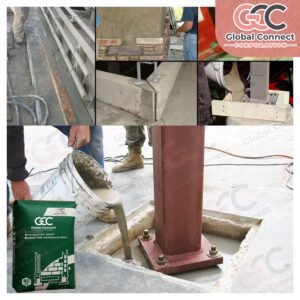
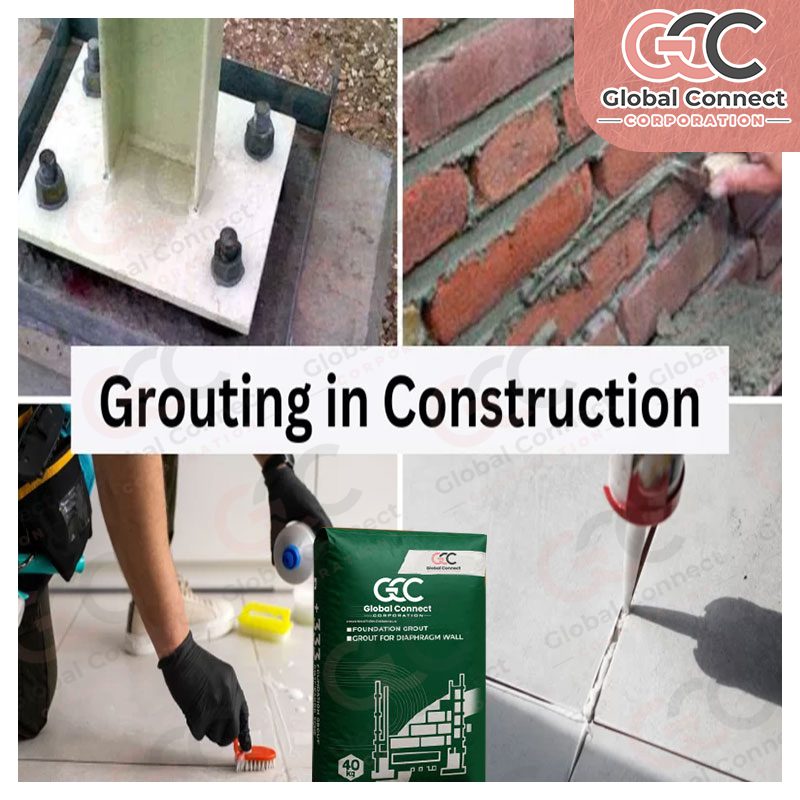
Cementitious grouts are specially engineered for optimal placement and performance in heavy machinery foundations, structural columns, and critical load-bearing applications. Their high flowability and non-shrink properties ensure void-free filling, rapid strength development, and long-term durability for permanent grout placement.
Product Types: Non-shrink cementitious grouts; pumpable, pourable fluid, precision, and high-strength grouts (e.g., D+ 333 Foundation Grout, D+ Block Adhesive)
Materials: Pre-blended dry powders; single-component mixes that require only water addition
Performance: High flowability; non-shrink; rapid setting; high early and final compressive strength (≥40 MPa); self-leveling; vibration and impact resistant
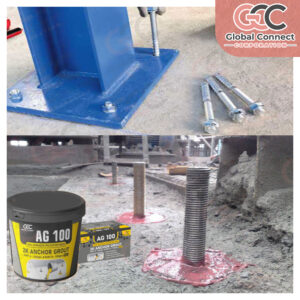
Compatibility: Suitable for concrete, steel base plates, columns, precast elements, rails, machinery footings
Special Features: Maintains dimensional stability under load; fills voids and gaps permanently; suitable for large and small gap grouting
Packaging: Available in 25kg or 40kg bags and pails depending on product
Applications: Heavy machinery foundations, bridge bearings, column bases, slab stabilization, precast panel connections
Mixing & Placement: Easy to mix; pourable or pumpable; can be vibrated for better compaction
Shelf Life: 12 months unopened, stored in dry conditions
Frequently Asked Questions – Cementitious Grouts
Why do infrastructure contractors choose cementitious grouts for large void-filling applications?
Cementitious grouts provide high-flow filling performance for structural voids, precast joints, machine foundations, cable ducts, and bearing plates while maintaining long-term stability under demanding project conditions.
How do contractors grout confined spaces without leaving air pockets?
Professional teams control grout consistency, pouring sequence, venting points, and placement methods to ensure complete filling in narrow gaps and enclosed cavities.
Which projects generate the highest demand for cementitious grouts?
Bridges, tunnels, metro systems, wind turbine foundations, precast construction, utility installations, industrial plants, and infrastructure projects continue to drive demand across Asia, the Gulf, Europe, and Africa.
Why is bleed resistance important during grouting operations?
Low-bleed grout helps maintain uniform material distribution, improves contact beneath structural elements, and reduces the risk of weak zones caused by excess water separation.
Can cementitious grouts be pumped over long distances?
Yes. Pumpable cementitious grouts are widely used for large foundations, underground works, utility corridors, and infrastructure projects where manual placement would be less efficient.
How do precast contractors achieve accurate joint filling between concrete elements?
Proper joint preparation, controlled grout placement, and selecting the correct flow characteristics help ensure complete filling and reliable load transfer between precast components.
What should project engineers evaluate before approving cementitious grout?
Professional buyers typically assess flowability, compressive strength, bleed resistance, expansion characteristics, pumpability, working time, and compatibility with project specifications before bulk procurement.
How do contractors improve efficiency during large-scale grouting projects?
Using pumpable grout systems, consistent mixing procedures, and planned placement sequences helps reduce labour time while maintaining reliable installation quality.
What trends are increasing demand for cementitious grouts?
Expansion of transportation infrastructure, renewable energy projects, underground construction, industrial facilities, and precast concrete systems continues to increase demand across Asia, the Gulf, Europe, and Africa.
Why do EPC contractors and infrastructure consultants build long-term partnerships with GCC for cementitious grouts?
GCC combines manufacturing excellence, product innovation, export-quality production, OEM and private-label manufacturing, and dependable global delivery to support contractors, distributors, industrial facilities, and infrastructure projects across Asia, the Gulf, Europe, and Africa.