Product Details
Non-shrink and structural repair mortars deliver permanent, void-free placement beneath heavy structural elements, ensuring stable load transfer without settlement or cracking. Engineered for precision grouting and structural strengthening, they offer rapid strength gain and excellent durability for demanding industrial, infrastructure, and civil engineering applications.
Product Types: Flowable, non-shrink grouts and high-strength structural repair mortars (e.g., D+ 333 Foundation Grout, D+ 333 Block Adhesive)
Materials: Pre-blended dry powders and dual-component kits for easy onsite mixing and application
Performance: Non-shrink to prevent settlement; high early and final compressive strength (≥40 MPa); self-leveling with excellent flowability
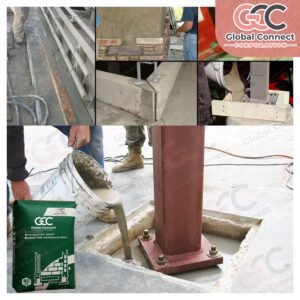
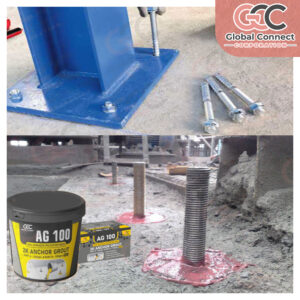
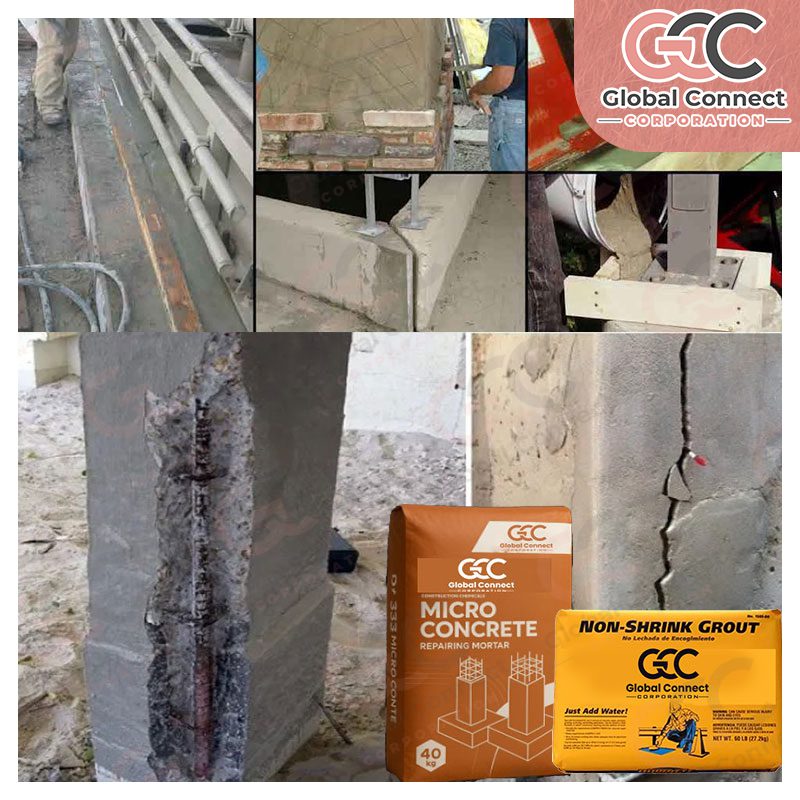
Compatibility: Ideal for machine foundations, base plates, anchoring bolts, bridge bearings, precast joint grouting, slab stabilization, and large void filling
Special Features: Rapid strength development; vibration and impact resistant; maintains dimensional stability under load; suited for structural rehabilitation
Packaging: Mostly 40kg bags; some variants in 25kg pails or kits
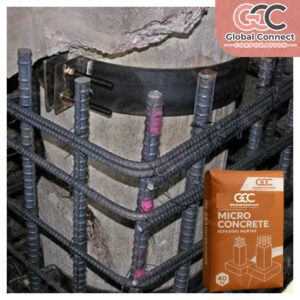
Applications: Heavy machinery foundations, structural grouting, bridge supports, columns, precast connections, industrial flooring repair
Mixing & Application: Mixed with water or resin; suitable for pumping, pouring, or flowing
Shelf Life: Typically 12 months with proper storage
Standards Compliance: ASTM C1107, EN 1504, IS 456, and related international standards
Frequently Asked Questions – Non-Shrink Mortars
Why do EPC contractors specify non-shrink mortar for equipment base plates?
Equipment foundations require continuous contact between the base plate and concrete. Non-shrink mortar helps eliminate gaps caused by shrinkage, supporting accurate machine alignment and reliable load transfer.
How does non-shrink mortar improve precast element installation?
It provides stable bedding beneath precast columns, beams, and structural components, helping maintain precise positioning while supporting long-term structural performance.
Which construction projects rely most on non-shrink mortars?
Industrial plants, power stations, bridges, wind turbine foundations, precast construction, steel structures, heavy machinery installations, and infrastructure projects continue to generate strong demand across Asia, the Gulf, Europe, and Africa.
Why is dimensional stability critical beneath heavy equipment?
Even small changes in grout thickness can affect equipment alignment, vibration control, and operational performance, making dimensional stability essential for precision installations.
Can non-shrink mortar be used for anchor pockets and bolt fixing?
Yes. It is commonly used to fill anchor pockets, support base plates, secure holding-down bolts, and stabilize structural connections that require dependable long-term performance.
How do contractors ensure complete contact beneath steel plates?
Proper formwork, correct mixing consistency, controlled placement, and adequate flow help the mortar fully occupy the space beneath the plate without leaving unsupported voids.
What should project consultants evaluate before approving non-shrink mortar?
Professional buyers typically review compressive strength, flow characteristics, expansion performance, working time, dimensional stability, and compatibility with project specifications before bulk procurement.
How do industrial plants reduce commissioning delays during installation?
Selecting non-shrink mortars with suitable strength-development characteristics helps contractors complete equipment installation more efficiently while maintaining installation accuracy.
What trends are increasing demand for non-shrink mortars?
Growth in renewable energy projects, factory automation, industrial expansion, precast construction, and high-precision equipment installations continues to increase demand across Asia, the Gulf, Europe, and Africa.
Why do industrial contractors and EPC companies build long-term partnerships with GCC for non-shrink mortars?
GCC combines manufacturing excellence, product innovation, export-quality production, OEM and private-label manufacturing, and dependable global delivery to support contractors, distributors, industrial facilities, and infrastructure projects across Asia, the Gulf, Europe, and Africa.